Many parents worry when their child gets a new molar. They fear cavities and long dental trips. They want simple ways to protect those back teeth. Dental Sealants come up as an option.
The American Dental Association says sealants can cut cavity risk in permanent molars by up to 80%. Here you will know what sealants are and how they work.
Dental sealants are thin, protective coatings that shield the chewing surfaces of permanent molars from cavity-causing bacteria. The American Dental Association says sealants can lower the risk of cavities on treated molars by up to 80%.
Parents should know first molars usually come in around age six, and second molars around age 12, so timing matters. Sealants help when deep pits on molars make brushing hard and cut decay on sealed surfaces by as much as 80%.
A pediatric dentist recalls applying sealants to a six-year-old’s new molars and seeing far fewer cavities at follow-up visits. These coatings can last for many years and are advised for molars at higher risk of decay.
Parents get sealants once permanent molars emerge. First molars show up near age six.
10.The coating can last many years, and dental visits can spot wear and allow reapplication if needed.
11.Dentists recommend sealants for molars at higher risk for decay, as part of routine pediatric oral care.
12.Next, parents can review the benefits of sealants for permanent molars.
Dental sealants offer a strong defense against cavities and decay, keeping children's molars safe and sound. With these protective coatings, parents can help their kids maintain better oral health for years to come.
Sealants act as thin protective coatings that cover chewing surfaces of back teeth. A pediatric dentist recalled sealing a six-year-old’s first molars the week they came in, and the child kept cavities away for years. The American Dental Association says sealants can lower cavity risk in permanent molars by up to 80%.
Parents often get second molars sealed around age 12, especially if teeth have deep pits that are hard to brush. Research shows sealed molars develop meaningfully fewer cavities, with decay reduced by up to 80% on treated surfaces.
Sealant application lasts many years and creates a barrier against cavity-causing bacteria, protecting enamel and helping children’s teeth stay healthy.
Dental sealants provide long-lasting protection for children's permanent molars. These thin coatings shield the biting surfaces from bacteria that cause cavities. Research shows sealed molars experience 80% less decay compared to unsealed ones.
Sealants work best on teeth with deep pits, which are tough to clean with a toothbrush. Parents appreciate knowing these barriers can last for many years, keeping their child's oral health strong and cavity-free.
Each time children munch on snacks, the sealants continue to defend against decay and promote better dental hygiene practices in daily life.
Sealants carry some risks, though they are generally safe. Occasionally, children may have an allergic reaction to the materials used in sealants. This can lead to redness or irritation around the treated tooth area.
Sometimes, sealants might not adhere properly to the molar surface. Poor application may result in gaps that allow bacteria to sneak in and cause cavities.
Parents should also consider that sealed teeth still require regular care. Sealants do not replace brushing and flossing; good oral hygiene remains essential. Children need those habits as their primary defense against decay after getting sealants.
Understanding these potential downsides helps parents make informed choices for their children's dental health.
Dental sealants can last for many years. They offer long-term protection for permanent molars, which are especially prone to decay. Research shows that sealed molars develop significantly fewer cavities than unsealed ones.
In fact, sealants can reduce the risk of cavities by up to 80%. Parents should keep an eye on their child's dental sealants during regular check-ups; a dentist will make sure they remain intact and effective.
Since children typically get second molars around age twelve, sealing these teeth at that time also ensures continued oral health protection. This proactive step is vital in keeping children's teeth healthy and strong for years to come. Next, parents should consider whether dental sealants replace regular dental care or not.
Sealants provide great protection for children's molars, but they do not take the place of regular dental care. Regular check-ups and cleanings remain essential. Parents should continue brushing their child's teeth twice a day and flossing daily.
Sealants work best when combined with these good hygiene practices. They can't reach every nook and cranny in a child’s mouth. Therefore, children need consistent oral health routines.
Research shows sealed molars can have about 80% fewer cavities than unsealed ones; this doesn't mean families can skip the dentist visits. Even with sealants, kids may still deal with decay if plaque builds up or if they don’t practice strong dental habits at home.
The American Dental Association supports combining sealants with routine dentist appointments to ensure complete protection against cavities and promote overall oral health for children’s teeth.
Parents should consider dental sealants for their children when the first permanent molars come in around age six. These sealants protect the teeth from cavity-causing bacteria. They work best on deep pits that are tough to clean. As second molars appear around age twelve, parents should also seek sealant application for them.
Getting sealants done early can make a big difference. Studies show sealed molars have up to 80% fewer cavities compared to unsealed ones. This preventive measure helps keep children's teeth healthy and strong, providing long-lasting protection against decay and ensuring better oral health overall.
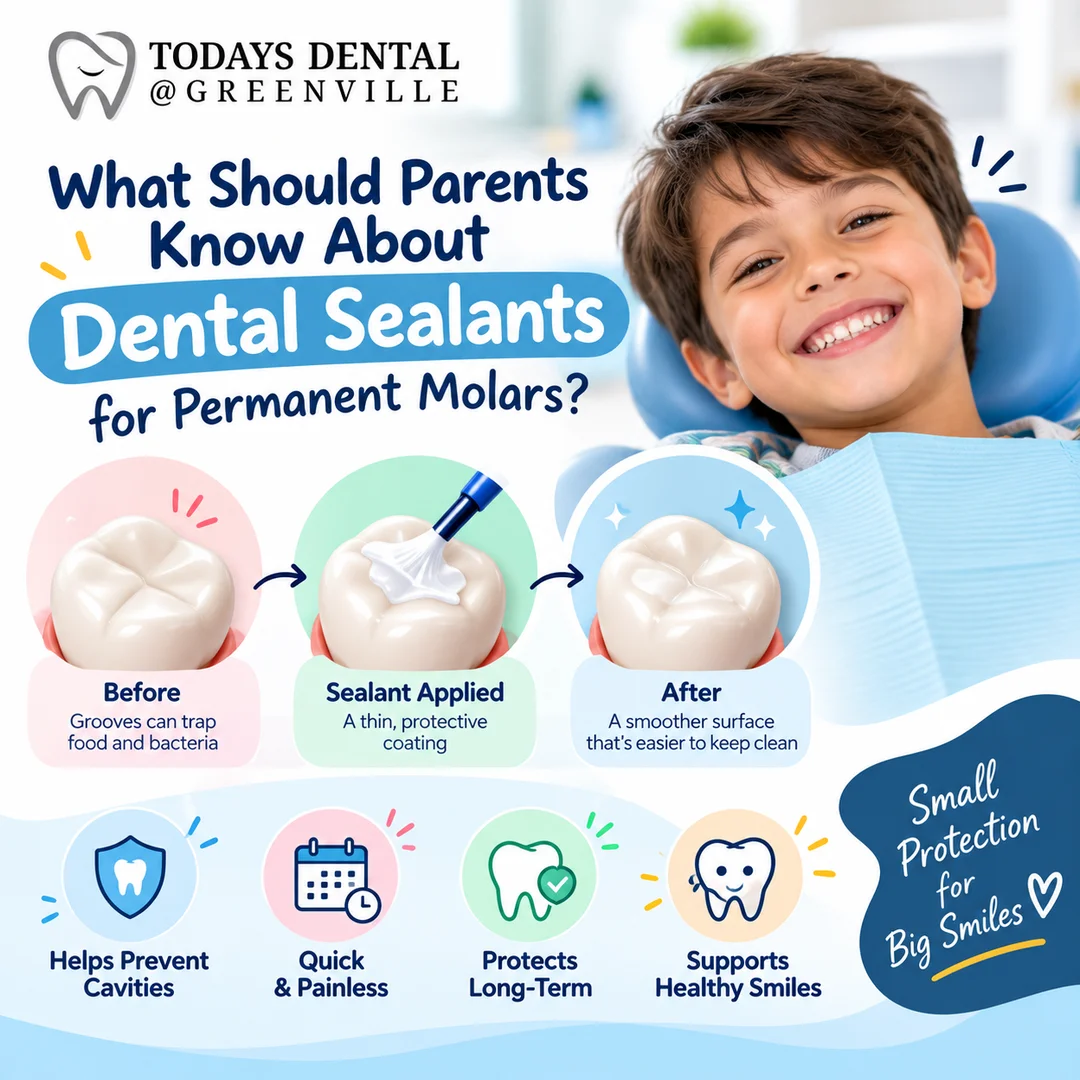
Dental sealants are thin coatings applied to the chewing surfaces of permanent molars. They help protect against cavities by sealing off grooves where food and bacteria can hide.
Permanent molars often have deep grooves that trap food particles. Sealants act like a shield, preventing decay and keeping those teeth healthy longer. It’s an easy step toward better oral health.
Sealants can last several years with proper care, usually around five to ten years. Regular check-ups at the dentist will help keep track of their condition; they may need reapplication over time.
Getting dental sealants is generally safe and painless; however, some children might experience sensitivity afterward. Always talk to your dentist about any concerns you may have before applying them on your child's teeth.
Tell us a little about what you need — we'll be in touch shortly.
1530 Poinsett Hwy Greenville, SC 29609, USA

Hi! I'm Tooth fairy! Your AI Assistant Ask me anything