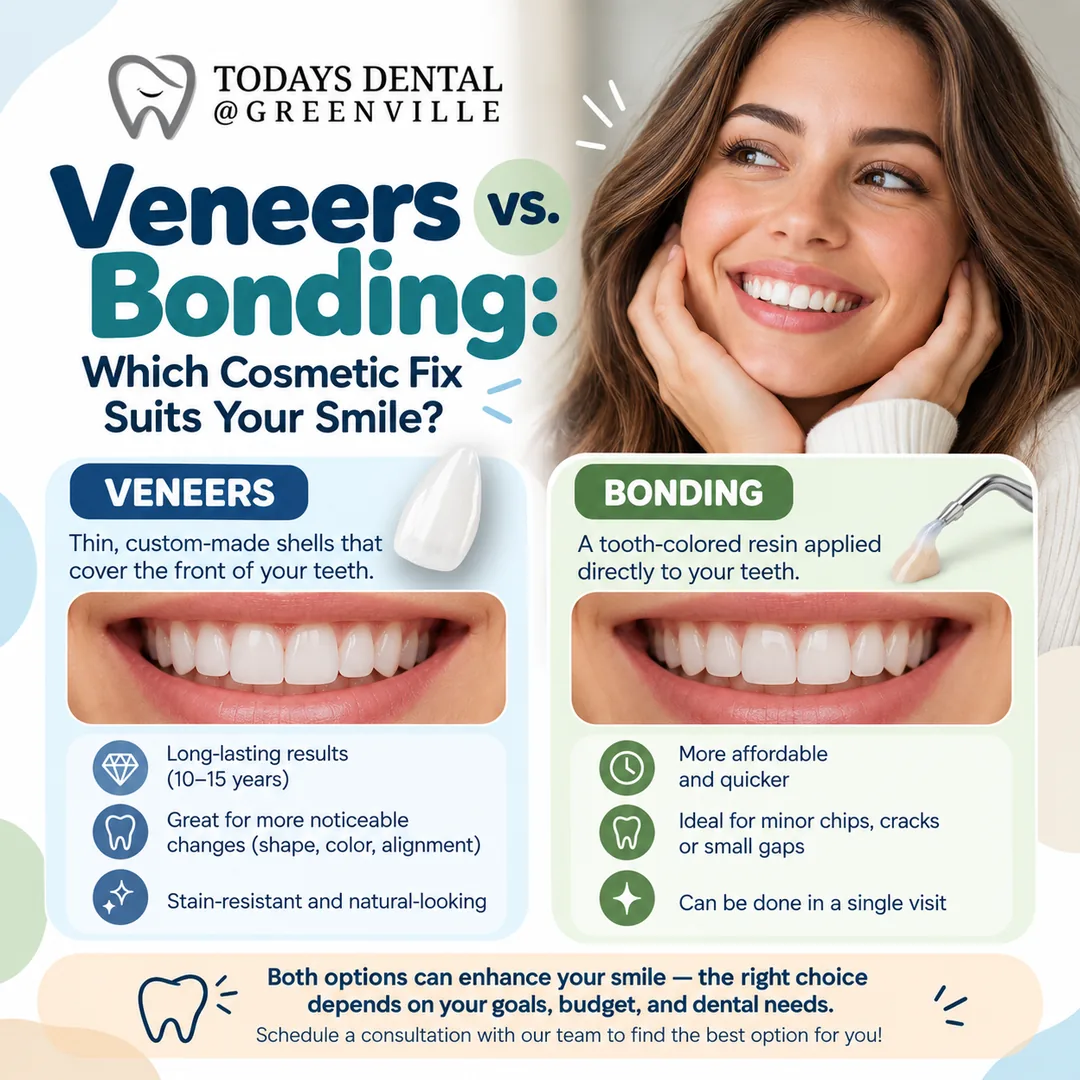
Many people feel self conscious about chips, gaps, or stains. Cosmetic dentistry and smile enhancement can fix those issues. Here you will know common tooth restoration needs and simple dental procedures.
Bonding is cheaper and often reversible, while porcelain veneers last longer and have better staining resistance. Composite bonding works well for minor cosmetic issues. Porcelain veneers suit bigger changes in dental aesthetics.
The next step involves comparing veneers and bonding in cosmetic dentistry. Both options serve to enhance smiles but differ significantly in their processes and results. Veneers consist of porcelain shells that cover the front of teeth.
Each veneer must be hand-crafted, leading to higher costs. This treatment suits patients seeking long-lasting solutions, particularly for chips, gaps, or discoloration.
Bonding uses composite materials to fix minor imperfections. It requires less alteration of natural tooth structure compared to veneers. Patients who need temporary fixes often benefit from bonding’s reversibility.
While veneers offer greater resistance to stains and last longer than bonding treatments, bonding remains a cost-effective alternative for small adjustments in dental aesthetics.
Veneers and bonding differ greatly in durability, maintenance, and cost. Veneers last longer than bonding treatments, making them a solid choice for those who need lasting cosmetic fixes.
Patients with stronger bite forces often prefer veneers due to their ability to withstand wear over time. Bonding works well for temporary or small fixes; it is less expensive but does not last as long.
Bonding requires less alteration of natural tooth structure compared to veneers, which permanently change teeth. Each veneer must be hand-crafted to fit individual teeth, contributing to higher costs than bonding options.
While veneers resist stains better than bonding materials, both methods offer unique benefits depending on a person's needs. Many find that understanding these differences helps them choose the right option for their smile enhancement journey.
Choosing the right cosmetic fix depends on individual needs and lifestyle. Bonding offers a budget-friendly option for those needing temporary or small cosmetic fixes. This method involves less alteration of natural tooth structure, making it reversible.
Veneers, on the other hand, last longer and resist stains better than bonding treatments. They work well for people with stronger bite forces and are effective against discoloration, chips, or gaps in teeth.
Patients should consider their smile goals when deciding between veneers and bonding. For a lasting solution that enhances dental aesthetics, veneers might be more suitable despite the higher cost due to customization and material requirements.
Bonding provides quick results at a lower price point but may not fulfill long-term vision for smile enhancement. Each person's choice reflects their unique situation in cosmetic dentistry.
Veneers and bonding are cosmetic dentistry options. They boost dental aesthetics. They help with tooth restoration and smile enhancement.
Veneers cover the front of teeth to shape them and help with teeth whitening. Bonding adds tooth-colored resin to fix chips and gaps. Both aid a smile makeover.
Lifespan varies by case. Veneers have higher durability. Bonding lasts less time. Care and oral health affect both.
Dentists review treatment options and oral health first. For veneers they remove a thin layer, take impressions, then bond shells. For bonding they do surface preparation, place composite, and shape it. Both are common dental treatments.
Pick based on tooth restoration needs, budget, and desired lifespan. Ask about staining resistance and durability. Your dentist will explain the best treatment options for your smile enhancement.
Tell us a little about what you need — we'll be in touch shortly.
1530 Poinsett Hwy Greenville, SC 29609, USA
Hi! I'm Tooth fairy! Your AI Assistant Ask me anything