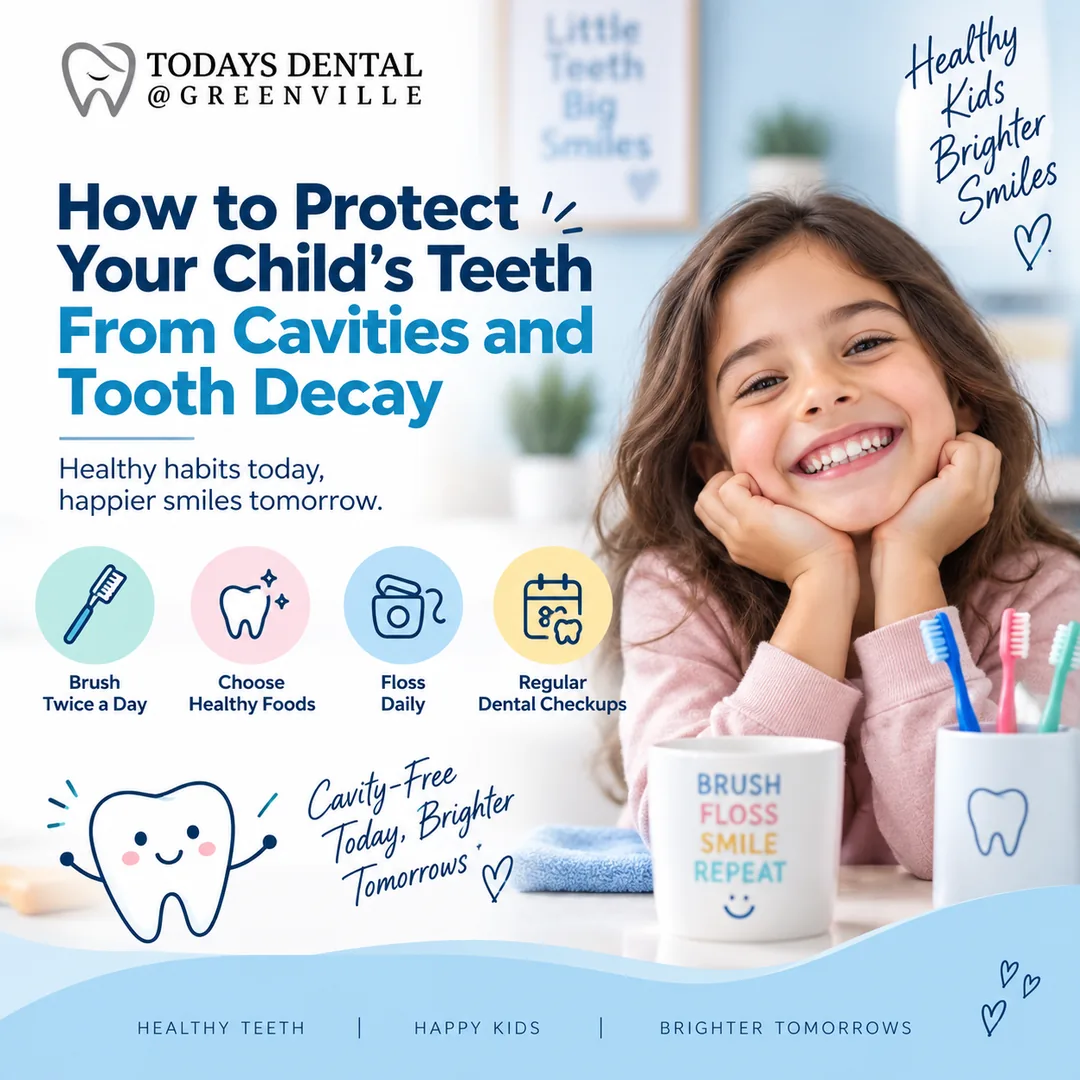
Many parents worry about cavities and tooth decay in their children. Kids often eat sugary foods and skip brushing. That puts enamel at risk. Parents want clear steps for cavity prevention, oral hygiene, and basic dental care.
Fluoride and sealants help protect enamel and lower the chance of cavities. Here you will know about brushing tips, the right toothbrush, fluoride use, limiting sugary foods, regular dental visits, and how sealants work.
To prevent cavities and tooth decay in children, encourage proper brushing and flossing habits. Kids should brush their teeth twice a day using fluoride toothpaste. Flossing helps remove food particles stuck between teeth; this protects the enamel from decay.
Limit sugary snacks and drinks, as they contribute to cavity formation. Offer healthy alternatives like fruits or nuts instead of candy or soda. Regular dental checkups ensure kids maintain oral health; dentists can spot issues before they become serious problems.
Consider dental sealants for added protection against cavities; these coatings shield the chewing surfaces of back teeth effectively.
Brushing and flossing are essential habits for children. Parents should teach kids how to brush their teeth correctly. A soft-bristled toothbrush is a good choice. Children must brush for two minutes, twice a day, using fluoride toothpaste. This helps remove plaque and prevents cavities.
Flossing also plays a crucial role in oral hygiene. It removes food particles and plaque from between teeth where brushes cannot reach. Parents can assist young children until they develop the skill themselves.
Consistent practice will help establish lifelong dental care routines that prevent tooth decay and support overall oral health.
Fluoride toothpaste plays a key role in cavity prevention. This special toothpaste helps strengthen tooth enamel, making it more resistant to decay. Children should use a rice-sized amount for toddlers and a pea-sized amount for kids over three. Regular brushing with fluoride toothpaste can significantly lower the chances of developing cavities.
Parents can also consider fluoride treatments at the dentist's office. These treatments provide an extra layer of protection against tooth decay. Dental professionals apply fluoride varnish directly on children's teeth during routine visits. Frequent checkups keep oral health in check and ensure that children receive necessary dental care to maintain healthy teeth.
Limiting sugary snacks and drinks is crucial for protecting children's teeth. Sugar feeds bacteria in the mouth, causing tooth decay. Parents should encourage healthy options like fruits and vegetables instead of candy or soda. Frequent snacking on sugary foods increases cavity risk, as it exposes teeth to acids longer.
Drinks high in sugar can harm enamel too. Water or milk makes better choices for hydration. Involving children in selecting snacks helps them understand the importance of oral hygiene. A positive approach creates lasting habits that protect their smiles against cavities and tooth decay.
Regular dental checkups and cleanings help keep children's teeth healthy. Dentists can spot early signs of cavities or tooth decay during these visits. They will also provide a professional cleaning, removing plaque buildup that brushing at home might miss. Kids should visit the dentist every six months for the best care.
Parents can teach children about the importance of these appointments from a young age. Many dentists recommend fluoride treatments during visits to strengthen tooth enamel. Consistent dental care builds positive habits for lifelong oral health. By maintaining regular visits, parents protect their child's smile now and in the future from cavities and other issues.
Parents can consider dental sealants as a smart way to protect their child's teeth. Sealants act like tiny shields for the back teeth. They cover the grooves and pits that often trap food and bacteria, making it harder for cavities to form. This simple procedure takes only a few minutes in the dentist's office.
Children should receive dental sealants soon after their permanent molars emerge, usually around ages six and twelve. Research shows that children with sealants have 80% fewer cavities in those molars compared to those without them.
Going for regular dental visits ensures timely applications of these protective coatings while keeping oral health on track. Healthy habits at home also support lifelong oral hygiene practices.
Healthy eating shapes a child’s oral health. Balanced meals and nutritious snacks provide essential vitamins for strong teeth and gums. Focus on fruits, vegetables, whole grains, and dairy products to support enamel strength. Limiting sugary foods reduces the risk of cavities significantly.
Caregivers should model good oral hygiene practices daily. Brushing twice a day with fluoride toothpaste helps fight decay. Flossing every night removes food particles between teeth effectively. Establishing these routines early sets children up for lifelong habits that promote dental care and minimize tooth decay.
Teaching children to eat healthy foods helps prevent tooth decay. Parents should encourage their kids to choose fruits, vegetables, and whole grains. These foods are nutritious and help strengthen enamel. It's also wise to limit sugary snacks and drinks. Sugar leads to cavities and promotes bad bacteria in the mouth.
Snacking can be part of a healthy diet if done right. Offer options like cheese, yogurt, or nuts instead of candy or chips. Make mealtime fun by involving children in food preparation; this sparks interest in healthy eating habits. Establishing good routines now sets them up for lifelong oral health success.
Caregivers play a vital role in setting an example for children. They should always practice good oral hygiene themselves. Using a soft toothbrush, parents can show proper brushing techniques while singing a fun song or counting to create an enjoyable experience. This hands-on approach keeps kids engaged and encourages them to mimic these habits.
Flossing also deserves attention. Caregivers should demonstrate how to floss correctly for effective plaque removal. Keeping fluoride toothpaste handy is essential as well; caregivers can explain its importance in strengthening enamel and preventing tooth decay. By modeling these behaviors, they help instill healthy oral care routines that last a lifetime.
Consistent daily oral care routines keep children’s smiles bright and healthy. Parents should help their kids brush twice a day with fluoride toothpaste. This habit removes plaque and fights cavities effectively. Flossing once a day also plays an important role in cavity prevention. It cleans between teeth where toothbrushes cannot reach.
Healthy eating habits support strong enamel, too. Children should avoid sugary foods that can lead to tooth decay. Encouraging water intake instead of sugary drinks helps wash away food particles and acids from the mouth. Regular dental visits ensure any problems are caught early, maintaining good oral hygiene for life.
Use good oral hygiene every day. Brush twice with a soft toothbrush and fluoride toothpaste. Floss once a day. Cut down on sugary foods and sugar intake. Keep regular dental visits. Sealants help protect enamel. Good dental care and dental hygiene lower cavity risk.
Plan dental visits every six months. Ask a pediatric dentistry office for a schedule that fits your child. Regular visits catch tooth decay early. They also guide cavity prevention.
Yes. Fluoride strengthens enamel and fights tooth decay. Use fluoride toothpaste as your dentist advises. Fluoride is a key part of dental care and cavities prevention.
Sugary foods and sticky snacks raise the risk. Drinks with sugar feed the bacteria that cause cavities. Serve water and low sugar snacks. Watch overall sugar intake every day.
Yes. Sealants add a thin shield on chewing surfaces. They help cavity prevention for kids. Good dental hygiene, fluoride, and regular dental visits work with sealants. Keep a routine with a brush and floss.
Tell us a little about what you need — we'll be in touch shortly.
1530 Poinsett Hwy Greenville, SC 29609, USA
Hi! I'm Tooth fairy! Your AI Assistant Ask me anything