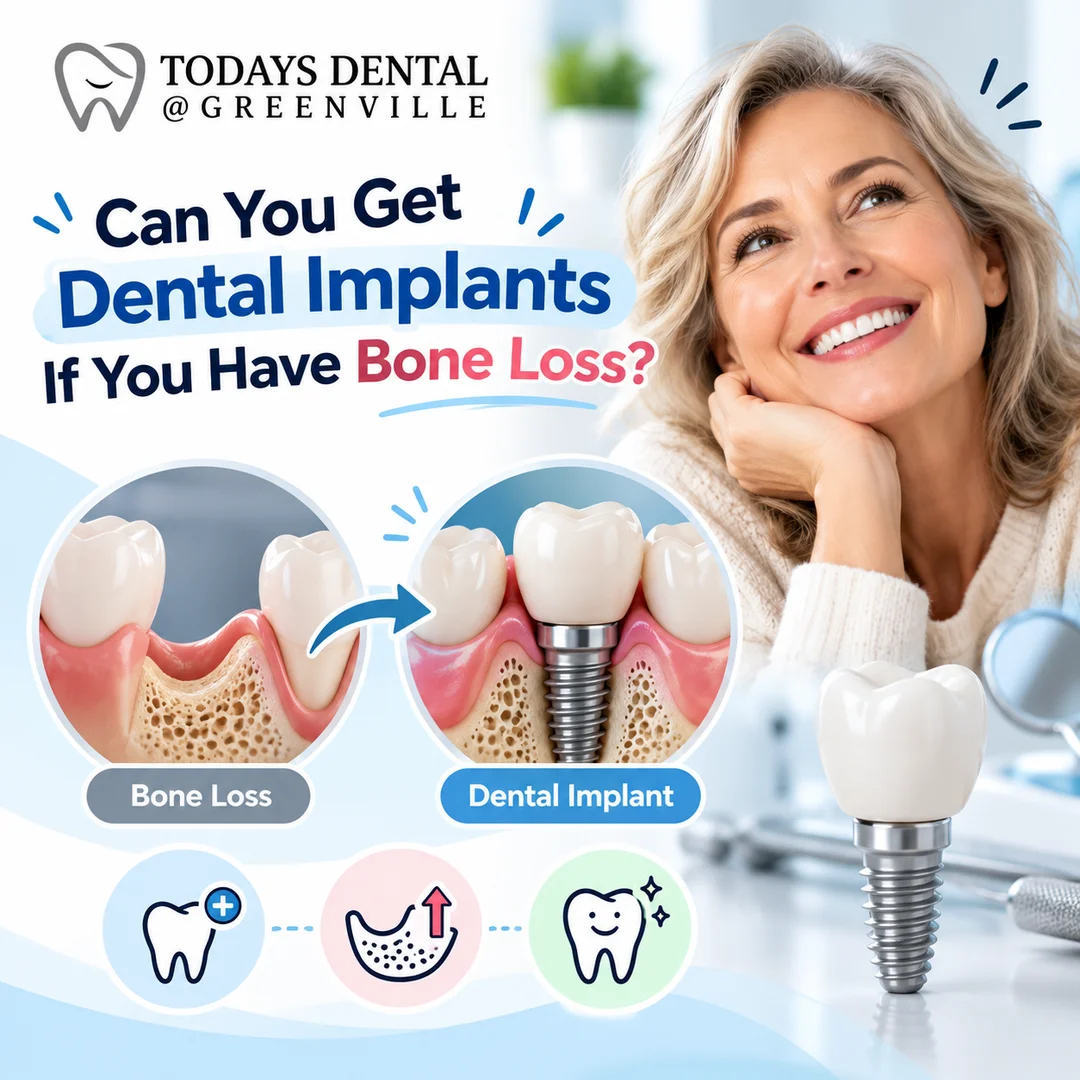
Losing teeth often brings one big worry, bone loss in the jaw. Many patients fear they can no longer get dental implants. That fear is normal and common. Dentists hear it all the time. Dental implants can still work after bone loss. A dentist will check bone density and health.
Can You Get Dental Implants If You Have Bone Loss?
Many people wonder if dental implants are an option when they face bone loss. The good news is that modern techniques can help them regain their smiles.
Modern implant techniques for bone loss
Dentists can still offer dental implants to patients with jawbone loss. Bone grafting often adds new bone, using bone from the patient or graft materials. A surgeon recalled a sinus lift that rebuilt the upper jaw in six months, letting a patient get a full arch restoration.
Most people who lost one or more teeth remain dental candidates, despite age or bone density issues.
Advances opened options for severe cases. Zygomatic implants anchor into the cheekbone when the jaw has little bone left. Mini implants and Allon style procedures speed some implant procedures and help dental restoration.
Common health conditions, including osteoporosis, rarely rule out implants completely, so an oral surgery consultation is needed to judge implant success.
Factors determining implant eligibility
Dental implants can still work after jawbone loss. Many people remain candidates despite age or bone loss.
- General jawbone condition, including bone density and the severity of jawbone loss, guides implant plans; low bone density often calls for bone grafting or a sinus lift to rebuild support.
- Overall health and medical history affect candidacy; conditions like osteoporosis or controlled diabetes rarely rule patients out, but oral surgery risks and healing ability must be evaluated.
- Oral infection and periodontal disease must be treated before implant placement; active gum disease raises the chance of implant failure and bone loss.
- The number and location of missing teeth change the approach; a single tooth may need a standard implant, several teeth can use multiple implants, and full arch cases may use All-on or full arch restoration.
- Available bone shape and volume determine what grafting is needed; bone grafting uses the patient’s bone or graft material to stimulate new bone growth and create enough width or height for implants.
- Sinus anatomy matters for upper back teeth; a sinus lift raises the sinus floor to add bone for secure implants in the upper jaw.
- Advanced options matter when loss is severe; zygomatic implants anchor in cheekbone bone for people who cannot have standard implants after major jawbone loss.
- Mini implants offer a less invasive choice for some patients; they work well for specific short-term or low-load restorations and for patients with limited bone.
- Age alone does not block candidacy; older adults still get successful implants, because implant dentistry can prevent further jawbone loss after tooth replacement.
- Surgical skill and implant procedure choice affect outcomes; implant dentistry advances and maxillofacial surgery techniques raise implant success even after bone loss.
- Patient commitment to oral hygiene and follow-up care matters; good daily care and dental visits help implants last and protect bone.
- Final eligibility comes after a consult, imaging, and planning; a dental professional evaluates bone density, health, and options before a final recommendation.
Solutions for Bone Loss Before Implants
Bone grafting helps rebuild lost jawbone. Surgeons place new bone material where it's needed, making it stronger.
Sinus lifts raise the sinus floor to create more space for implants. These procedures make getting dental implants possible, even in tricky situations.
Bone grafting and sinus lifts
Surgeons take bone from another area of the patient or use special bone grafting material to grow new jawbone. This oral surgery boosts bone density and prepares the jaw for dental implants after jawbone loss.
A maxillofacial surgeon who has placed dozens of grafts said patients often still qualify for implants despite bone loss.
Sinus lifts raise the sinus floor to add graft material in the upper jaw near the cheeks. This procedure helps full arch and single tooth restorations and supports implant success.
Many dentists note that common health conditions, like controlled osteoporosis, rarely completely rule out implant candidates, so a consultation with an implant dentist is necessary.
Zygomatic implants for severe cases
Bone grafting and sinus lifts prepare the jaw for dental implants. For severe bone loss, zygomatic implants offer a strong alternative. These implants anchor in the cheekbone instead of the upper jaw. They provide stability even when traditional methods fail.
Patients with significant jawbone loss can benefit from this technique. Many still qualify for dental restoration despite their condition. Zygomatic implants reduce healing time and improve implant success rates.
Advances in implant dentistry have made them a reliable option for those who thought they had no chance at tooth replacement. A consultation helps determine if these unique solutions fit individual needs perfectly.
Benefits of Dental Implants After Bone Loss Restoration
Dental implants offer many advantages after bone loss restoration. Patients find that these benefits improve both function and quality of life.
- Dental implants can prevent further jawbone loss. When patients lose teeth, the underlying bone often deteriorates. Implants stimulate bone growth and maintain the jaw's structure.
- They provide a stable tooth replacement option. Unlike dentures, which can shift or cause discomfort, dental implants stay securely in place. This stability allows for easier eating and speaking.
- Implants can improve oral hygiene. Patients with dental implants report easier cleaning routines compared to those with bridges or dentures. Good oral health becomes more manageable without the worry of retaining devices.
- The natural appearance is another big plus. Modern implants look like real teeth, giving patients confidence in their smiles. Many feel more comfortable socializing once they have a complete smile again.
- They enhance overall dental function as well. Patients regain full chewing power with dental implants, making meals enjoyable again. This restoration leads to better nutrition over time.
- Dental implants last a long time when cared for properly; some can even last a lifetime! Most people don’t need to replace them every few years like other options might require.
- Zygomatic implant techniques expand treatment possibilities for severe cases of bone loss; this innovation opens doors for individuals who thought they could not receive implants due to high levels of deterioration.
- Each patient's situation is unique, yet advancements in implant dentistry make it possible for most people to become candidates despite age or health issues; old beliefs about eligibility no longer apply universally.
- Proper placement techniques ensure high success rates for individuals with previous bone loss; skilled professionals evaluate each case individually to determine the best approach.
- A strong support system comes from having implants in place; patients enjoy increased confidence and satisfaction with their smiles after successful procedures are completed, enhancing emotional well-being alongside physical health.
Frequently Asked Questions
Can I still get dental implants if I have bone loss?
Yes, you can still get dental implants with bone loss. However, your dentist may need to assess the extent of the loss first.
What are my options if my jawbone is too weak for implants?
If your jawbone is weak, there are solutions like bone grafting or using mini implants. These methods help strengthen the area for better support.
How does bone grafting work for dental implants?
Bone grafting involves adding material to your jawbone to encourage new growth. This process can create a strong base for successful dental implant placement.
Will getting dental implants hurt if I have bone loss?
Pain levels vary by person and procedure type. Dentists use anesthesia and sedation to keep you comfortable during the surgery; most patients find recovery manageable afterward.