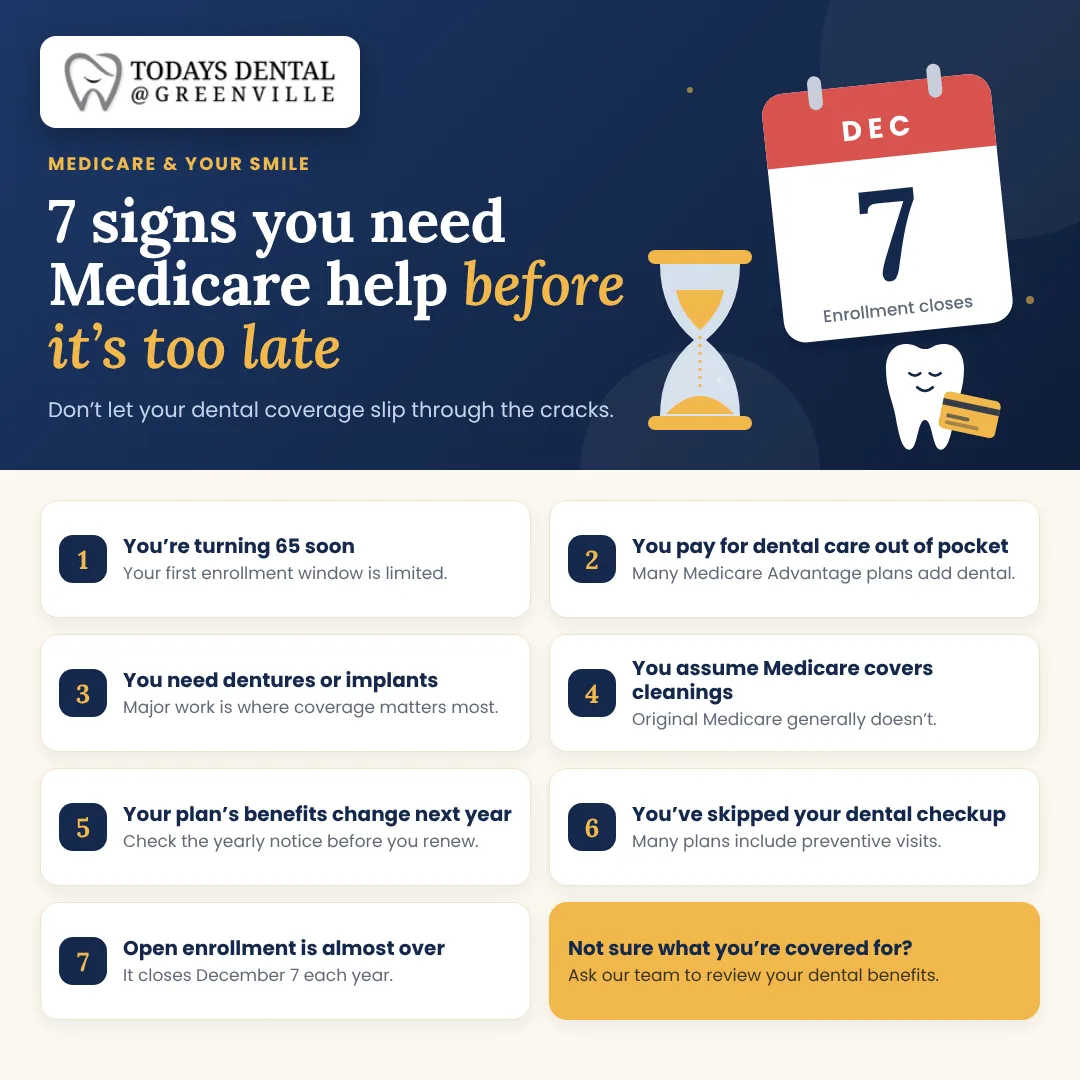
Medicare can feel like a pile of forms with no clear answers. A person may be unsure which plan covers care, when to enroll, or how to pay for medicine.
Original Medicare usually does not cover routine dental cleanings or exams. Some people compare Medicare Advantage, Medicaid, or individual dental insurance plans to help manage dental costs.
This guide covers seven signs a person may need Medicare assistance and where to find help. The first sign may be easy to miss.
Many people find Medicare options puzzling. Parts A, B, C, and D can feel like a maze with no clear path to follow.
Part A helps cover inpatient hospital care. Part B covers outpatient care and other medical services. Part D helps pay for prescription drugs. These labels can blur together, especially for someone also checking dental coverage.
Part C, also called Medicare Advantage, offers another way to get Medicare benefits through a private plan. Original Medicare usually does not cover routine dental care, while some Medicare Advantage plans offer dental benefits. Coverage varies by plan, so a person should check the details before choosing a dentist.
A person choosing a Medicare plan may find that dental coverage changes the comparison.
| Plan type | Dental coverage | What to check |
|---|---|---|
| Original Medicare | Usually does not cover routine dental care, such as cleanings. | How the person will pay for routine dental visits. |
| Medicare Advantage | Some plans include dental benefits. Coverage varies by plan. | Covered services, costs, and which dentists accept the plan. |
For example, someone who needs regular cleanings may find that a plan’s dental network matters as much as its medical coverage. The plan details can help show whether a preferred dentist accepts the coverage.
People choosing a dentist may expect Medigap to help pay for routine dental care. Medigap works with Original Medicare to cover some costs, such as copays and deductibles, but it generally does not cover routine dental services.
In plan reviews, people often find this detail easy to miss. They can check each policy’s benefits and ask whether dental coverage comes from a separate plan.
Enrollment deadlines can feel like a ticking clock. Missing them creates stress and limits options for getting necessary coverage.
Missing the initial enrollment period can lead to difficulties. A person might miss out on coverage for an entire year. This mistake often leaves them feeling confused and anxious during medical emergencies.
Late enrollment can result in penalties, raising costs significantly over time. With rising healthcare expenses, those extra fees accumulate rapidly. They may also find it harder to access necessary services when they need them most. Seeking help from a Medicare expert can make a big difference in managing these challenges effectively.
Special enrollment periods can feel like traversing a maze. Individuals often find themselves puzzled about when they can enroll in Medicare. Life events trigger these special enrollment periods, such as moving or changing jobs. Missing the chance to sign up can lead to gaps in coverage and unexpected costs.
A personal story highlights this confusion. After retiring, one person thought they could sign up anytime. They learned too late that their initial window had closed, leaving them without coverage for months.
Understanding these timeframes is essential for anyone aiming to remain protected from medical expenses and ensure proper health care access during transitions.
People often feel lost during annual open enrollment. They struggle to understand what choices they have. Each year, Medicare allows changes to plans. Participants must decide whether to switch or stay with their current coverage.
Many do not know the deadlines for making these decisions. Missing an important date can lead to gaps in coverage or extra costs. The rules and options may seem overwhelming, leaving individuals uncertain about their best path forward. Seeking help can make this process smoother and less stressful for everyone involved.
Unexpected medical bills can catch anyone off guard. People often feel the pinch from soaring premiums, deductibles, and copays. Many are unaware of programs that might help cut those costs down.
Unexpected medical bills can catch anyone off guard. They often arrive after a routine check-up or treatment. These surprise costs add stress on top of existing health concerns. Patients may feel like they're drowning in payments that don’t match their expectations.
High out-of-pocket expenses can lead to confusion and frustration. Many individuals struggle with pricey premiums, deductibles, and copays. Without help, sorting through these charges becomes overwhelming. Understanding the resources available to lower costs is vital for peace of mind.
A person looking for a dentist may also be balancing Medicare premiums, deductibles, and copays.
| Cost | Why it can be hard | Possible next step |
|---|---|---|
| Premiums | They add to regular expenses. | Ask about programs that may lower costs. |
| Deductibles | They can lead to bills before coverage helps. | Check what the plan requires. |
| Copays | They can make care harder to budget for. | Review costs before choosing a plan. |
Many people miss out on programs that can help lower their costs. Medicare offers various assistance options for individuals struggling with high expenses. Some programs include Extra Help for prescription drugs and Medicaid for low-income seniors. These initiatives reduce the financial burden of premiums, deductibles, and co-pays.
Not knowing about these resources often leads to unnecessary spending on healthcare. Seeking assistance can provide substantial savings. Learning more about available options helps individuals make informed choices about their coverage. Next, changes in healthcare needs might prompt a reevaluation of Medicare plans.
Your health can shift quickly. A new diagnosis or increased medication needs might leave you feeling lost.
A new diagnosis or chronic condition can shake anyone's world. It often brings change to daily life and health care needs. Increased medication may become necessary, and that can complicate Medicare choices. Suddenly, someone must consider what coverage fits their new situation best.
Many feel overwhelmed by the adjustments they need to make. They might struggle to find adequate plans that offer appropriate support. Understanding how these changes impact current coverage is crucial for managing costs and accessing essential treatments effectively.
Changes in health often lead to increased medication needs. A new diagnosis can add numerous prescriptions to a person's routine. Managing these medications may feel overwhelming. Some people find themselves taking more than one pill a day, or even multiple doses for different conditions.
Increased medication costs can surprise many individuals. People could receive unexpected bills that strain their budgets. When someone faces high out-of-pocket costs for these medicines, they might not know what programs exist to help lower those expenses. Each person's experience with their healthcare needs is unique, making it crucial to seek assistance when needed.
Recent hospital stays or surgeries can change health needs drastically. New diagnoses often require different treatment plans and medications. This change may confuse individuals about their coverage options, particularly with Medicare.
Struggles with increasing medication costs might arise after these events. Many people find themselves needing more medications than before. Some may not even know about assistance programs that could help manage those costs effectively.
Choosing the right Part D plan can feel like a puzzle. Many faces confusion about which drugs are covered and how much they will pay out of pocket.
Picking a Part D plan can cause real headaches. People often find it tough to sift through the options available. Each plan covers different medications, and not all drugs fall under every plan. Formularies can look like a maze with many twists and turns, leaving people confused about what they might pay for their prescriptions.
High costs also add stress to the process. Many don’t expect those hefty out-of-pocket expenses when purchasing medication. With coverage gaps lurking in these plans, surprises arise at the pharmacy counter.
This situation often pushes individuals to seek help from Medicare assistance programs or knowledgeable agents who simplify this complicated landscape.
Understanding Medicare can feel like walking through a maze. Formularies list covered drugs but vary by plan. One might find that specific medications aren’t included, leading to unexpected costs. It's challenging for many who rely on those prescriptions.
Coverage gaps also create confusion. These gaps occur when drug costs rise significantly after hitting a certain threshold. Patients might be surprised once they reach this point and face higher out-of-pocket expenses. Grasping these details is essential for making informed decisions about healthcare choices.
High drug costs catch many people off guard. They walk into the pharmacy, only to face shocking prices for their medications. One individual shared how a common prescription jumped from affordable to exorbitant overnight. These sudden expenses can throw a wrench in anyone's budget.
Most folks don’t know about programs that could help reduce these costs. They feel lost when examining insurance policies and formulary lists. Understanding what coverage applies becomes a frustrating puzzle.
Anyone facing this surprise should look for support in finding effective solutions customized to their needs. Next comes the issue of accessing care, which often adds another layer of confusion and stress.
When patients face denials for necessary services, they often feel frustrated and lost. Finding in-network providers can also prove challenging. Long waits for treatments add to their distress. Each delay in care amplifies worry about health and finances. Those hurdles highlight the need for guidance.
Denied coverage for services can cause frustration. Many people find themselves stuck when they need care but face denial from their Medicare plan. This situation often leads to unexpected out-of-pocket expenses and delays in receiving necessary treatments. It is essential to understand why a claim might be denied, as this knowledge can help navigate the appeals process effectively.
Finding support during this time makes a big difference. Assistance programs exist to help individuals challenge denials and access needed care. These resources offer guidance on how to appeal decisions, ensuring that patients receive the benefits they deserve without facing unnecessary financial burdens.
Having trouble finding in-network providers can complicate healthcare decisions. People often feel lost while searching for dentists or specialists that accept their insurance. They might find it tough to locate the right doctors who are part of their plan, and this leads to frustration.
Limited options can cause anxiety as individuals want quality care without excessive costs. Some may end up paying more out-of-pocket than expected due to unexpected fees from out-of-network providers.
This situation makes it crucial for patients to understand their networks clearly and seek assistance when needed. Finding a trusted provider should not feel like hunting for a needle in a haystack; getting help can ease the journey significantly.
Delays in obtaining needed treatments can lead to frustration and stress. Patients often find themselves waiting for the care they urgently need. They may encounter long appointment schedules or insurance approval setbacks. This uncertainty can worsen their conditions, especially when medical needs increase.
Some individuals have faced delays after scheduling a procedure only to hear about unexpected coverage issues. Others experience difficulty getting referrals from primary care providers, which adds another layer of waiting time.
Each setback tests patience and impacts overall health outcomes significantly. Gaining timely access to treatment is crucial for everyone pursuing a solution for oral issues or other healthcare concerns.
Life changes can stir up a whirlwind of questions. Moving to a new state or adjusting your personal circumstances can leave you feeling lost about Medicare options.
Moving to a new state changes everything. It can bring excitement, but also challenges. Finding a new dentist immediately tops the list of important tasks. A person must double-check insurance acceptance before making an appointment. Unfamiliar surroundings may lead one to overlook dental care needs.
Feeling lost in this transition is common. One might feel anxious about starting fresh with healthcare providers. It's smart to ask locals for recommendations or check online reviews for nearby dentists. This helps narrow down options and find someone trustworthy in their new home base.
Changes in marital status impact many aspects of life, including healthcare coverage. A person’s eligibility for Medicare may shift after getting married or divorced. They might need to reassess their plan options during this time.
Newlyweds should consider how their spouse's insurance plans affect their coverage. This can lead to better decisions about which plans are best suited for both individuals and families.
For those who recently separated, they may find themselves needing different health services that fit their new circumstances. Understanding these changes helps them maintain proper care while managing costs effectively.
Eligibility for Medicaid or other assistance programs can change lives. Many people may not realize that income and family size often play a crucial role in determining eligibility. A single person with limited income might qualify, while families may find help depending on how many members they have.
Life changes can trigger new opportunities for assistance as well. For example, becoming unemployed or having a baby often leads to eligibility for various support programs. Understanding the requirements is key, but it doesn’t have to be overwhelming. With some research and guidance, individuals can navigate these options effectively.
Medicare assistance simplifies the process of choosing the right plan. Experts provide customized support to help individuals meet their unique needs.
Personalized plan selection puts individuals on the right path. Each person has unique needs regarding healthcare. After reviewing various plans, they can find one that fits perfectly. A customized choice helps manage costs and covers necessary services.
Exploring available options often feels overwhelming. Many might struggle with selecting between Advantage and Original Medicare plans. The right guidance makes all the difference in ensuring that each individual maximizes their benefits without incurring unexpected expenses. Personalized selections lead to peace of mind regarding medical coverage and costs.
Understanding enrollment and deadlines can feel challenging. Clear guidance can empower people to make informed decisions about their Medicare plan options.
This process equips individuals with the knowledge they need to stay on top of critical deadlines while ensuring they obtain proper coverage for their healthcare needs.
Cost-saving strategies can make a big difference in easing financial stress. Individuals often overlook programs that help lower out-of-pocket costs. Many benefit from assistance with premiums, deductibles, and copays.
Considering preventive care can save money in the long run. Regular check-ups catch problems early and avoid costly treatments later. Exploring generic medications also helps reduce prescription costs significantly. Taking these steps creates opportunities for healthier finances while managing healthcare needs more effectively.
People often face unexpected denials for coverage or services. This situation can feel frustrating and confusing. A Medicare advisor can assist with these appeals. They know the process thoroughly. Advisors guide individuals through the paperwork needed to challenge a denial.
The appeal process becomes easier with expert help. An advisor will explain what steps to take next, ensuring that every detail is addressed. Support during this time can significantly improve chances of approval, turning a tough situation into a manageable one.
Understanding prescription coverage can feel like a challenge. Many struggle to choose the right Part D plan. They often face confusion over which medications are covered and how much they will pay. Formularies and coverage gaps can make things even tougher.
A person recently shared their experience while trying to pick a plan. They felt uncertain in the details and found themselves overwhelmed by high drug costs. With help, they discovered strategies to save money and better understand their options. Support makes this process easier and less stressful for everyone involved.
Various organizations provide Medicare assistance. Some offer help through local programs that connect individuals to resources. Others use licensed advisors who specialize in Medicare choices.
Nonprofit groups also lend a hand, guiding people with their questions and concerns. These options simplify understanding for anyone overwhelmed by the details of Medicare plans.
State Health Insurance Assistance Programs, or SHIP, offer free help to people exploring Medicare. Trained counselors provide guidance on various plans and options. They explain the difference between Original Medicare and Advantage Plans clearly.
SHIP also assists with understanding Medigap policies. Many individuals find themselves puzzled about coverage details and costs. Counselors take time to answer questions and offer personalized assistance. This support can make a significant difference in managing healthcare needs effectively.
Licensed Medicare brokers and agents play a crucial role in the healthcare landscape. They guide individuals through the array of Medicare options. These professionals help clients find plans that fit their needs, whether for health care or prescription drugs. Their expertise simplifies intricate choices.
Many people appreciate having someone knowledgeable at their side. Brokers and agents can clarify details about coverage and costs. They focus on finding solutions customized to individual situations, ensuring clients make informed decisions without feeling stressed. Accessing this level of assistance can transform how someone approaches their Medicare journey.
Nonprofit organizations offer valuable help for those managing Medicare. They provide guidance with plan selection and enrollment deadlines. Staff members can assist with understanding different options available under Medicare, such as Original Medicare versus Advantage plans. These organizations also support individuals in managing costs through various programs.
Many nonprofits focus on education about benefits and services. They empower people to make informed choices regarding their healthcare coverage. Their resources often include access to trained advisors who answer questions about specific needs or situations.
This assistance proves essential, especially during transitions like moving or experiencing life changes. Next, explore how individualized support makes a difference when obtaining Medicare assistance.
Nonprofit organizations often provide valuable support for Medicare beneficiaries. Online tools and resources can also play a significant role in guiding individuals through their Medicare journey.
Websites like the official Medicare site offer extensive information about plans, coverage options, and benefits available under each part of Medicare. Users can compare different plans right from their computer or smartphone.
These digital platforms simplify the process of finding relevant information quickly. They often feature calculators to help estimate out-of-pocket costs based on specific healthcare needs.
Many online resources allow users to read reviews and ratings for various providers. This access helps individuals make informed decisions without feeling overwhelmed by choices. Some websites even offer chat features that connect users with live agents who answer questions directly, providing immediate assistance when needed.
When someone receives a notice of coverage termination, they should act fast. Waiting often leads to bigger problems down the line, especially with urgent medical needs or unexpected bills piling up.
A notice of coverage termination can shake anyone's confidence. Losing health insurance feels like losing a safety net. Individuals may feel anxious when they discover their Medicare coverage has ended or is about to end. This situation demands immediate attention.
Some people receive a letter stating their plan will terminate soon. Others find out during the annual open enrollment period that they’ve lost options due to unexpected changes in their plans.
They might scramble to understand how this affects their access to healthcare and what steps they need to take next. Taking swift action can help individuals secure new coverage options before missing critical deadlines, which could lead them into deeper financial trouble concerning medical expenses.
Receiving Medicare fraud alerts signals a serious issue. People should pay close attention to these warnings. Fraud can lead to unexpected costs and complications in healthcare. It might involve billing for services not rendered or overcharging for procedures.
When someone gets an alert, they need to act quickly. They must check bills against the services received. Reporting suspicious activities helps protect their benefits and finances. Taking these steps can prevent further issues down the line.
Unexpected medical needs can create chaos. Urgent bills pile up, causing worry. Patients may feel lost and overwhelmed. They might struggle to pay for necessary treatments or medications. Ignoring these expenses is not an option; they only grow larger over time.
People often overlook available assistance programs during stressful times. Many may qualify for relief without realizing it. Timely support can help manage out-of-pocket costs and ease financial strain.
Understanding benefits becomes essential, especially when faced with mounting healthcare expenses. Seeking guidance from Medicare assistance can provide clarity and direction in times of need, leading directly into the next section about how Medicare Assistance Can Help.
Gather your medical and financial information for the appointment. List all current medications and providers to share with the advisor. Jot down any questions or concerns you want to discuss, too. Being prepared will help you make the most of your time together.
Collecting medical and financial information plays a crucial role in understanding one’s Medicare options. Individuals need to compile details about their health history, including any diagnoses or treatments received. This information helps when selecting the right plans and coverage.
Financial documents also matter. They include income statements, healthcare costs, and previous insurance policies. These details guide people as they explore various benefits under Medicare, helping them make informed decisions about their healthcare needs.
Listing current medications and providers helps create a clear picture of healthcare needs. This information acts like a roadmap for the appointment. It shows what treatments someone is currently receiving and who is providing those services.
Keeping an accurate list makes discussions easier. It allows the advisor to offer better recommendations that fit seamlessly into existing routines. A detailed inventory can reveal gaps in coverage or potential overlaps in care, which can save both time and money later on.
Gathering questions and concerns can ease the process of understanding Medicare. Start by writing down any topics that create confusion. Note specific plan details, such as coverage options or enrollment periods. Someone might wonder about how various parts relate to their needs.
Consider asking about potential costs and finding ways to reduce them. It helps to inquire about prescription drug benefits as well. Creating a list allows individuals to stay focused during appointments.
This preparation leads to clearer conversations with advisors or representatives, making it easier for someone to grasp their options fully.
Managing Medicare can feel a bit like juggling while riding a unicycle. Stay organized by marking important dates on your calendar, so you don’t miss any enrollment deadlines. Keep an eye on changes too; they pop up more often than spring flowers!
Keeping track of enrollment dates takes focus. Missed deadlines can lead to gaps in coverage. Individuals should jot down key dates on a calendar. This habit fosters better management of healthcare plans.
Changes often occur yearly, so checking dates regularly makes sense. Annual notices provide important reminders about open enrollment periods. Utilizing alerts from health insurance websites can help too. Staying organized helps avoid confusion and ensures proper coverage during transitions in life or health needs.
Reviewing coverage annually helps people stay on top of their Medicare plans. Many find that health needs change over time. An annual review can spotlight these changes.
People often discover gaps in their coverage during this process. They might also find new options that save them money. A yearly check-in ensures they have appropriate benefits for the coming year, allowing timely adjustments if needed. It’s like giving a little tune-up to your healthcare plan, keeping everything running smoothly and efficiently.
Medicare changes frequently. New plans and regulations can surprise anyone. Keeping up with these updates helps individuals make informed choices. They avoid unexpected costs or coverage gaps this way.
Local news, Medicare websites, and community events provide valuable information. Attending workshops or webinars can clarify recent developments too. Talking to peers who are also exploring Medicare offers insights as well.
They share their experiences and any challenges they face while adjusting their plans accordingly. Staying connected empowers people to tackle uncertainties with confidence and clarity, ensuring they receive the benefits they deserve without confusion or hassle.
You may need help if you feel unsure about Medicare Parts A, B, C, or D; face an enrollment deadline; struggle to compare plans; cannot tell if your drugs are covered; worry about costs; receive a denied claim; or have a life change that may affect your coverage. It is a lot to sort out alone.
A State Health Insurance Assistance Program, or SHIP, offers free, unbiased guidance. A counselor can help you compare Medicare plans and understand your choices. Ask questions until the details make sense.
Ask before you enroll, switch plans, or miss a deadline. Get help sooner if you receive a bill you do not understand or a claim denial. Waiting can limit your options.
Bring your Medicare card, a list of your medicines and doctors, and any plan or billing letters you have. These details help a counselor check coverage and costs. Remove personal details from papers you share with anyone you do not know.
Some individuals qualify for free Medicare help based on income and resources. People with limited financial means often receive assistance through programs like Medicaid or the Medicare Savings Programs. Those eligible typically earn less than a certain threshold, which varies by state. Seniors aged 65 and older can also tap into these resources if they meet specific criteria. Disabled individuals under 65 may find similar support available to them too. Being informed about these options helps reduce out-of-pocket medical expenses significantly.
Finding a trustworthy advisor can feel like searching for a needle in a haystack. Look for someone with good credentials and experience. Check their reviews and ask for recommendations from friends or family. A genuine advisor will be transparent about their services and fees. Meet with potential advisors to discuss your needs. An honest conversation can reveal if they truly understand Medicare assistance. Trust your instincts; if something feels off, keep looking until you find the right fit.
Gathering the right information helps in managing dental options. Being prepared makes things easier. Start with personal identification details like your name, address, and date of birth. This establishes your eligibility for dental services. Collect insurance information such as policy numbers and coverage specifics. This helps determine benefits available to you. Take notes about any current dental issues or concerns you have. Clear communication about problems aids in finding solutions. List all medications you currently take, including dosages. This information informs the dentist about potential interactions or side effects. Write down previous dental experiences or treatments you've had. Sharing past experiences can guide the dentist in your care plan. Prepare a list of questions regarding treatment options and costs. Questions empower you to make informed decisions during appointments. Include emergency contacts in case you need assistance after treatment. Having someone reach out for you provides peace of mind during recovery. Ensure that you have a calendar ready to track upcoming appointments and follow-ups. Staying organized reduces missed visits and delays in care. Bring along any medical records relevant to your dental health, including X-rays if available. This documentation assists dentists in assessing your needs better. Familiarize yourself with any specific procedures that might be necessary based on your condition or history; knowing what to expect can eas
Tell us a little about what you need — we'll be in touch shortly.
1530 Poinsett Hwy Greenville, SC 29609, USA

Hi! I'm Tooth fairy! Your AI Assistant Ask me anything